 ultimate-guide
How Can Personalized Care Improve Quality of Life for Dementia?
Last Updated: October 26, 2026
Quick Summary
Personalized care dementia aligns with who someone actually is, their interests, communication style, and daily rhythms to support their dignity and enhance quality of life. When care reflects individual preferences rather than generic approaches, it reduces confusion, preserves engagement, and maintains safety while supporting independence.
- Start by documenting the person's history, preferences, current capabilities, and daily patterns to build an effective care plan.
- Routines should match the person's natural rhythms, such as wake times and activity preferences, rather than a standard schedule.
- Activities should reflect past interests like music or gardening and match current abilities and preferences.
- Professional nursing oversight with monthly RN visits can support medication management and catch health changes early.
- Communication strategies include using short sentences, the person's name, eye contact, calm tone, and offering choices when appropriate.
Table of Contents
- Why Personalized Care Matters for Dementia
- Building a Personalized Dementia Care Plan
- Dementia Daily Routine Examples That Support Comfort
- Activities for People with Dementia That Promote Engagement
- Communication Strategies for Dementia Caregivers
- How Professional Nursing Care Supports Personalized Dementia Care
- Starting Your Personalized Care Plan Today
- Frequently Asked Questions
Why Personalized Care Matters for Dementia
Dementia changes how a person experiences the world, their routines, their preferences, their sense of safety. Standard care approaches that work for the general population often miss what makes each person unique. That's where personalized care dementia becomes essential.
When care aligns with who someone actually is, their interests, their communication style, and their daily rhythms, it can reflect their individual preferences and support their dignity.
Enhanced quality of life through personalized care for dementia care isn't about doing more. It's about doing what matters most to that individual. A person who spent 40 years gardening doesn't need generic activities, they need soil under their hands. Someone who was a night owl shouldn't be forced into an early morning routine. These details matter more than most care providers realize.
The foundation of personalized care is understanding the person and their preferences.
Building a Personalized Dementia Care Plan
A personalized dementia care plan can reflect the person's needs and preferences.
Care plans can take account of the person's needs and preferences.
Assessing Individual Needs and Preferences
Before any care plan takes shape, you need a clear picture of the person. This goes far beyond their diagnosis.
Start with their history. What was their career? What hobbies consumed their time? Who were the important people in their life? What did a typical day look like 10 years ago? These aren't trivia, they're clues about what will feel natural and comforting now.
Then assess current capabilities and limitations. Can they follow two-step instructions? Do they recognize family members? What times of day are they most alert? Are there specific triggers that cause agitation, certain sounds, times, people, or environments? Does sundowning occur (increased confusion in late afternoon)? Does wandering happen at night?
Preferences matter too. Some people prefer quiet; others do better with gentle background music. Some want frequent social interaction; others need calm solitude. Some eat better at certain times. Some sleep better after gentle activity; others need wind-down time.
Document all of this. The information becomes the blueprint for everything that follows.
Setting Realistic Goals for Safety and Independence
Goals in dementia care often need reframing. The goal isn't to "cure" or "improve cognition", dementia doesn't work that way. Instead, goals focus on maintaining safety, supporting independence in what remains possible, managing symptoms, and preserving dignity and comfort.
Realistic goals might include: "Keep her safe while she continues to move around the home" or "Help him stay engaged in activities he enjoys" or "Manage medication accurately while supporting his sense of autonomy" or "Reduce nighttime wandering and improve sleep quality."
Goals can be described in specific, observable terms.
Safety goals are non-negotiable. Fall prevention, medication accuracy, nutrition, hydration, and skin care aren't optional. But within those safety boundaries, there's room to preserve choice and independence. That balance is what personalized care dementia achieves.
Dementia Daily Routine Examples That Support Comfort
A predictable routine can provide structure to the day for a person with dementia and their caregivers.
The best routines match the person's natural rhythms, not a generic schedule. If someone was always a late riser, forcing a 6 a.m. wake-up creates conflict. If they were an early bird, keeping them in bed until 9 a.m. leaves them frustrated.
A sample morning routine for someone who prefers early rising might look like: Wake at 6:30 a.m., gentle stretching in bed, assistance with bathroom and grooming, breakfast at 7:15 a.m. with a preferred beverage, then a structured activity like looking through photo albums or listening to music they loved.
For someone who needs more support, a routine might include assistance with personal care, verbal cues and reassurance, and breaks if the person becomes overwhelmed.
Afternoon routines often include a rest period (even if not a full nap), a snack, gentle activity or engagement, and preparation for evening. Evening routines should wind down gradually, dimmer lighting, quieter activity, warm beverages, and consistent bedtime rituals that signal sleep time.
A consistent routine may help provide structure. When routines change unexpectedly, a person with dementia may find the change difficult.
Activities for People with Dementia That Promote Engagement
Activities can be chosen to reflect someone's abilities, interests, and preferences. (Source: guidelines from the Centers for Medicare & Medicaid Services (CMS))
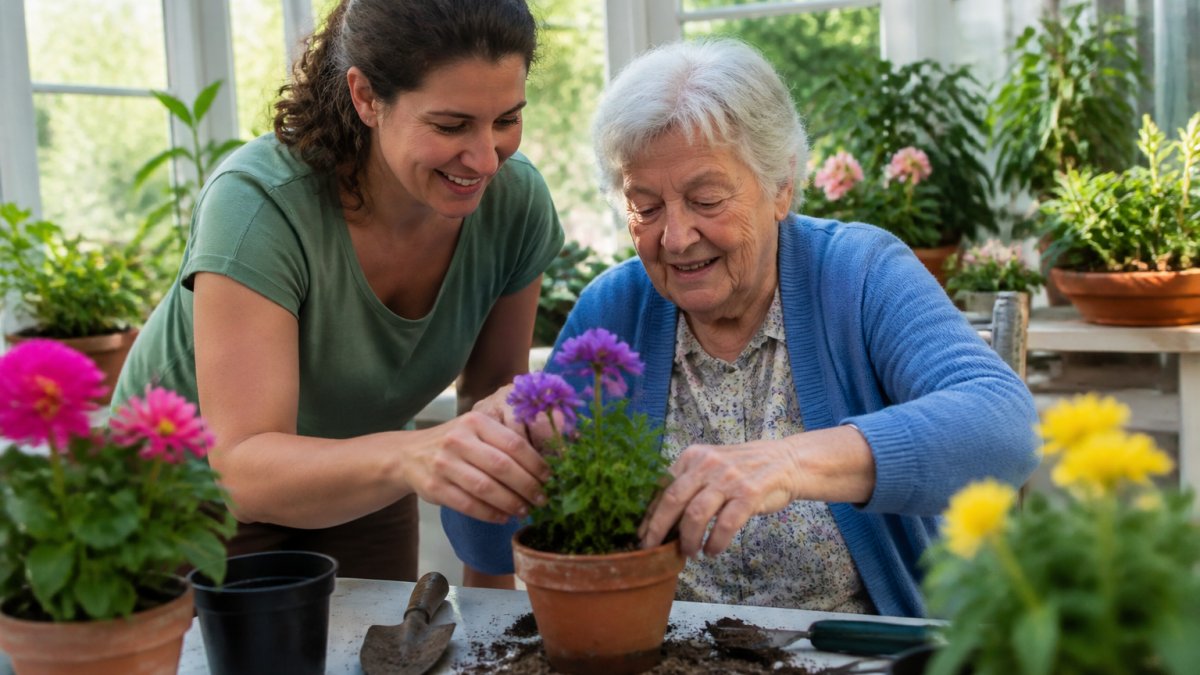
Activities can reflect a person's past interests, such as music or gardening.
Possible activities include sorting objects, folding fabrics, arranging photos, listening to music, watching birds, or simple crafts.
Activities can be selected with the person's abilities and preferences in mind.
CLAIM YOUR FREE CARE ASSESTMENT →
Activities may be done individually or in a group.
Communication Strategies for Dementia Caregivers
Communication is part of daily interactions.
Some caregivers use short, simple sentences when communicating.
Caregivers may use the person's name, make eye contact, and speak in a calm tone.
Caregivers may acknowledge the person's feelings and offer reassurance.
Caregivers may offer choices when appropriate.
Caregivers may use visual cues and gestures alongside words.
Caregivers may listen carefully and respond with reassurance.
How Professional Nursing Care Supports Personalized Dementia Care
Professional nursing oversight is part of the support Heartiva describes. The agency's care includes medication support.
Heartiva Home Health Care PLLC provides nurse-led in-home care with professional nursing oversight and a monthly RN visit.
Heartiva offers respite care for family caregivers.
You can explore what professional nursing services look like and how they integrate with family caregiving to support enhanced quality of life through personalized care for dementia care.
Starting Your Personalized Care Plan Today
Beginning a personalized care plan doesn't require waiting for a crisis. The best time to start is when you recognize that standard approaches aren't meeting your loved one's needs.
Start by gathering information. Write down their history, preferences, what times of day they're most alert, what triggers distress or calm, what activities they enjoy. Talk with family members who know them well. This foundation is invaluable.
Then assess what's working and what isn't in current care. Are there times of day when agitation increases? Does sleep suffer? Are there activities that genuinely engage them? Understanding the current state helps you build something better.
If you're managing care alone, consider where professional support could make the biggest difference. Professional support may include services such as medication support, wound care, personal care, or respite care.
Contact the team at Heartiva Home Health Care PLLC in Will County, IL or in DuPage County, IL to discuss your situation. A professional assessment can clarify what your loved one needs and how personalized nursing care might support their safety, comfort, and independence at home. You can also reach out directly to explore options and answer questions about building a care plan that honors who your loved one is and what matters most to them.
Personalized dementia care can reflect a person's history, preferences, and needs.
| Aspect | What It Means | Why It Matters |
|---|---|---|
| Individual Assessment | Understanding history, preferences, abilities, triggers | Ensures care aligns with the person, not a template |
| Consistent Routine | Same caregiver, same schedule, same approaches | Reduces confusion and builds trust |
| Meaningful Activities | Tasks that match interests and remaining skills | Preserves engagement and dignity |
| Professional Oversight | Registered nurse monitoring and coordination | Catches health changes early and ensures quality |
| Family Involvement | Caregiver input and respite support | Sustains caregiving and improves outcomes |
Frequently Asked Questions
How can personalized care improve quality of life for someone with dementia?
Personalized care can take account of an individual's preferences and needs. Heartiva's care plans are tailored to each client's needs, preferences, and daily routines.
What should a personalized dementia care plan include?
A personalized care plan can reflect the individual's needs, preferences, and daily routines. Heartiva's care plans are personalized, with professional nursing oversight and a monthly RN visit.
How do you create a daily routine for someone with dementia?
A routine can reflect the person's preferences and daily rhythms. Heartiva's care plans are tailored to each client's needs, preferences, and daily routines.
What activities can support a person with dementia?
Activities can reflect the person's interests and preferences. Heartiva's care plans are tailored to each client's needs, preferences, and daily routines.
How can caregivers communicate more effectively with someone with dementia?
Communication preferences can be considered when tailoring care to an individual's needs and daily routines.
When should a family consider professional in-home dementia care?
Heartiva offers respite care, skilled nursing, wound care, medication support, 24-hour care, and support for transitions home from a hospital or rehabilitation facility. Contact the agency to discuss your situation and available support.
Alzheimer's Association resources on dementia care planning
National Institute on Aging guidance for caregivers
American Geriatrics Society recommendations for person-centered care